Client Project · UX/UI Redesign
From Audience
Confusion to Role Clarity
From Audience
Confusion to Role Clarity
From Audience
Confusion to Role Clarity
Redesigning SciQuiry’s website and teacher onboarding to enable clearer evaluation and confident classroom adoption.
Redesigning SciQuiry’s website and teacher onboarding to enable clearer evaluation and confident classroom adoption.
Redesigning SciQuiry’s website and teacher onboarding to enable clearer evaluation and confident classroom adoption.
ROLE
UX/UI Designer
UX Researcher
SCOPE
Website Redesign
Onboarding
TIMELINE
Sep. - Oct. 2025
(5 Weeks)
TOOLS
2 Designers
(Abhay Rao)
ROLE
ROLE
UX/UI Designer
UX Researcher
UX/UI Designer
UX Researcher
SCOPE
SCOPE
Website Redesign
Onboarding
Website Redesign
Onboarding
TIMELINE
TIMELINE
Sep. - Oct. 2025
(5 Weeks)
Sep. - Oct. 2025
(5 Weeks)
Team
Team
2 Designers
(Abhay Rao)
2 Designers
(Abhay Rao)




About the Product
About the Product
SciQuiry is a K–8 adaptive science learning platform that supports students through interactive practice while giving teachers real-time classroom insights.
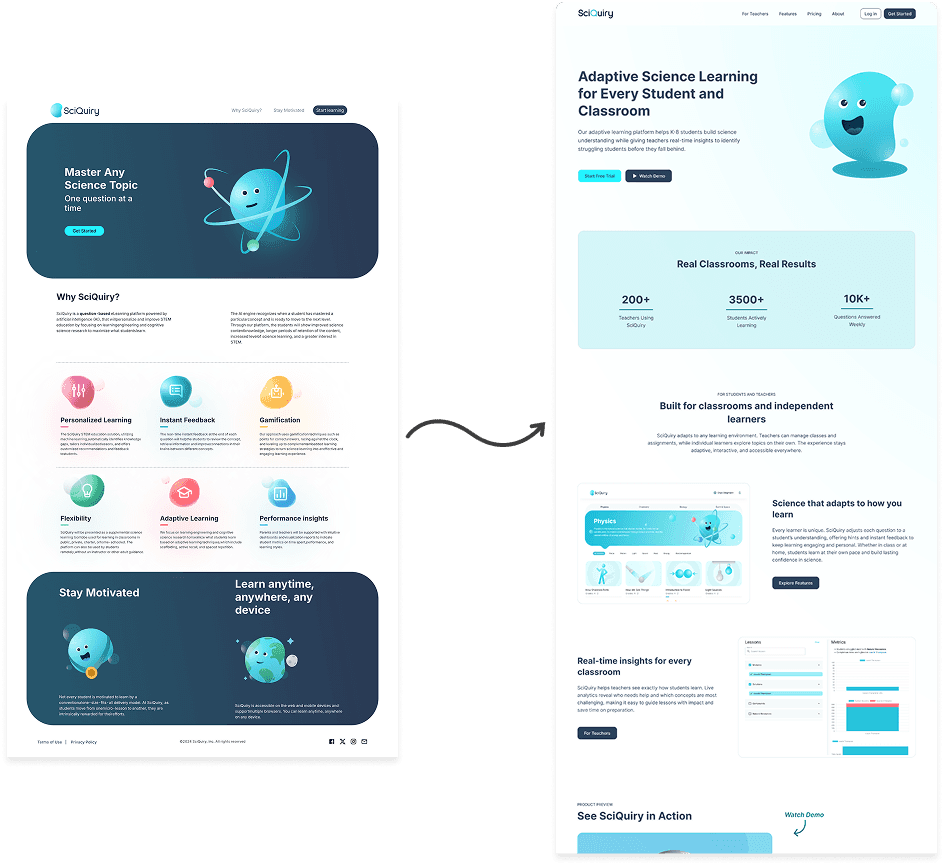
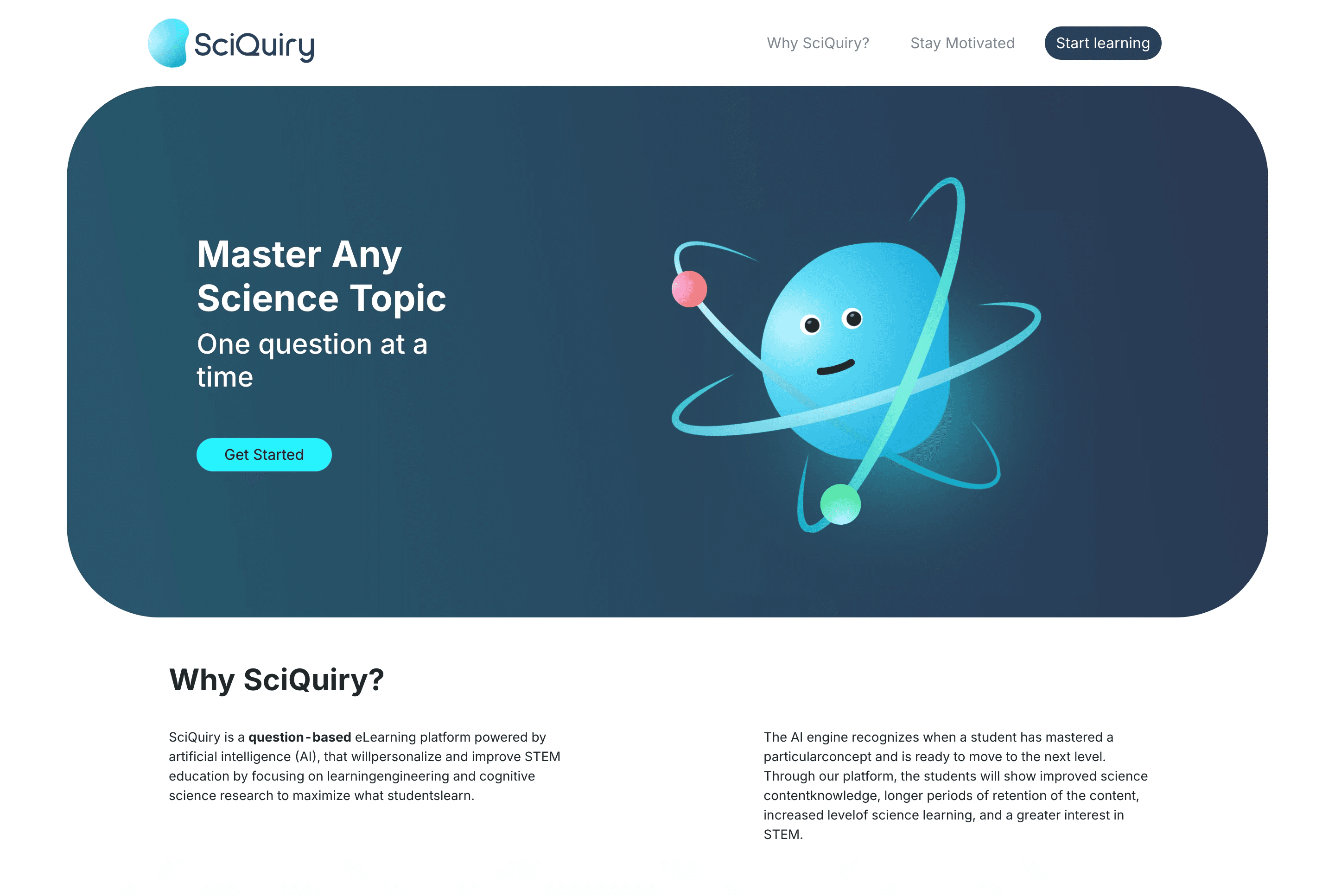
As the platform evolved, its website no longer reflected its capabilities. Messaging was broad, structure was unclear, and educators struggled to quickly assess classroom relevance. This gap between product strength and presentation prompted the redesign.
SciQuiry is a K–8 adaptive science learning platform that supports students through interactive practice while giving teachers real-time classroom insights.
As the platform evolved, its website no longer reflected its capabilities. Messaging was broad, structure was unclear, and educators struggled to quickly assess classroom relevance. This gap between product strength and presentation prompted the redesign.
The Clarity Problem
The Clarity Problem
Although SciQuiry offered strong classroom functionality, the website did not clearly support how educators evaluate teaching tools.
Teachers struggled to quickly understand:
Although SciQuiry offered strong classroom functionality, the website did not clearly support how educators evaluate teaching tools.
Teachers struggled to quickly understand:
Who the platform was designed for
How it worked in practice
What differentiated it
What would happen after sign-up
Who the platform was designed for
How it worked in practice
What differentiated it
What would happen after sign-up
Evaluation required effort instead of feeling intuitive.
Evaluation required effort instead of feeling intuitive.
The challenge was to redesign the experience so educators could assess value quickly and confidently.
The Solution Preview
The Solution Preview
The Solution Preview
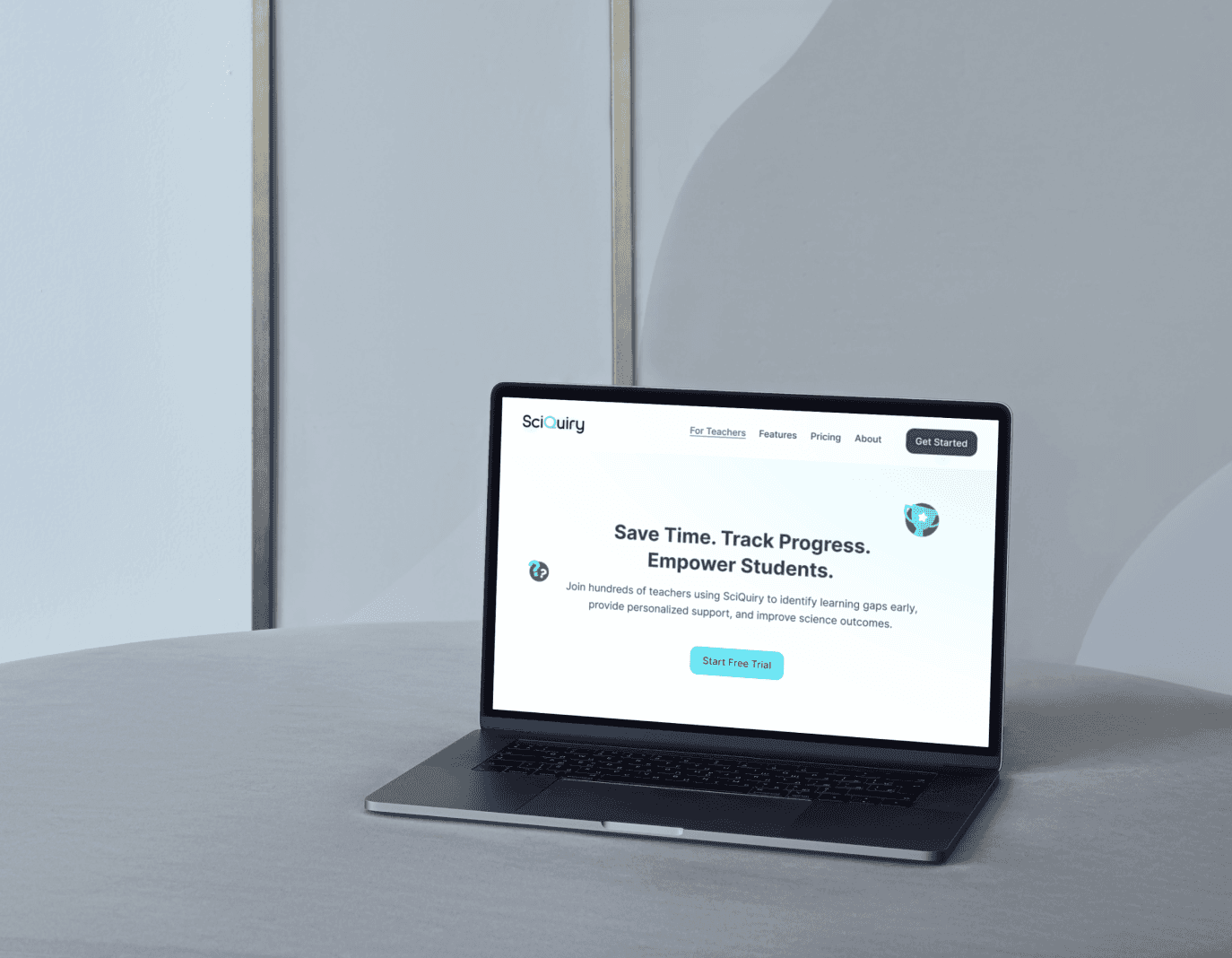
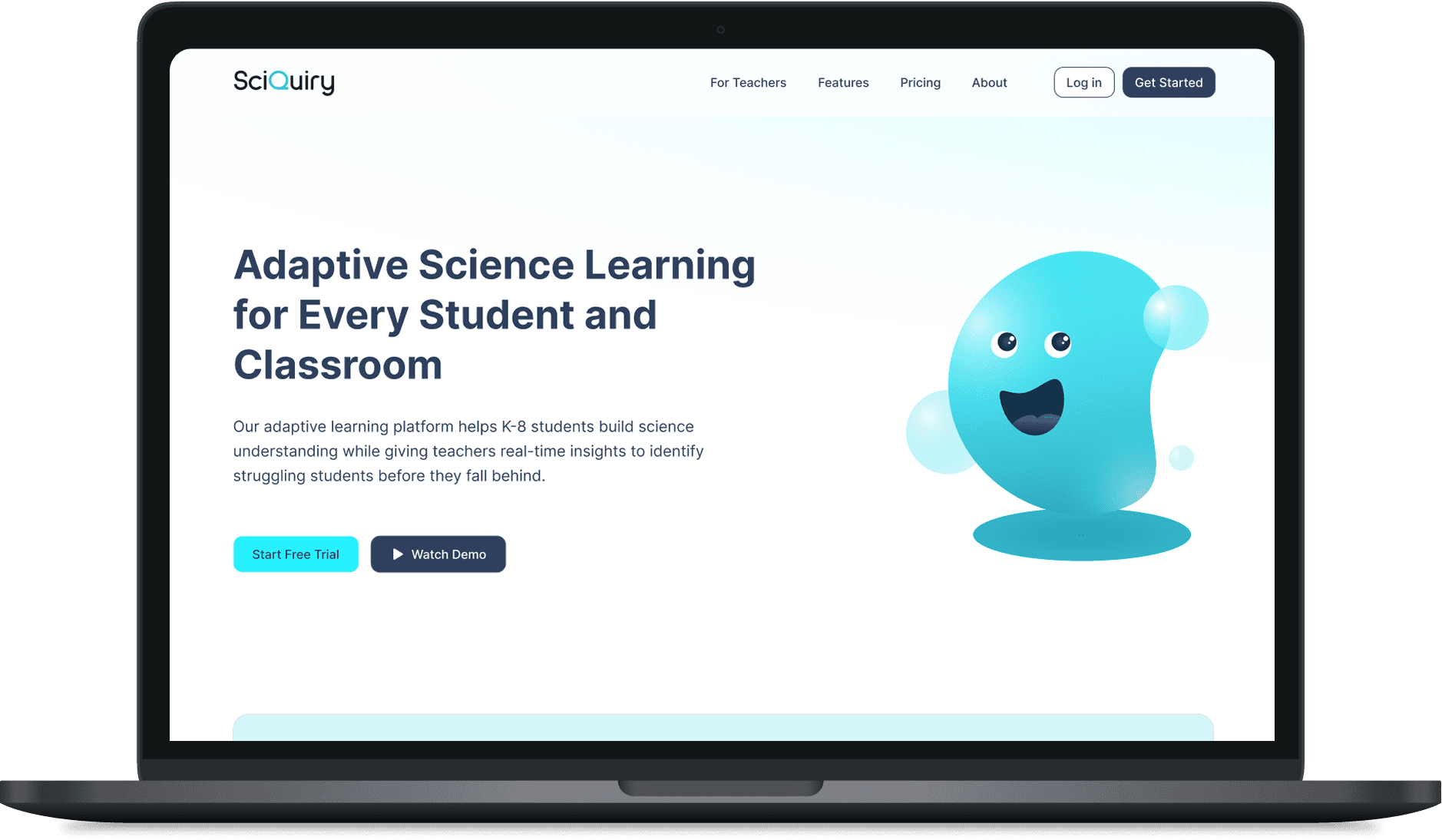
SciQuiry’s experience was restructured around clearer evaluation pathways, stronger product visibility, and earlier transparency.
By introducing role-based navigation and simplifying onboarding, SciQuiry now supports faster, more confident classroom adoption.
SciQuiry’s experience was restructured around clearer evaluation pathways, stronger product visibility, and earlier transparency.
By introducing role-based navigation and simplifying onboarding, SciQuiry now supports faster, more confident classroom adoption.
Research & Key Insights
Research & Key Insights
Research & Key Insights
To understand where the experience was breaking down, we conducted a focused discovery phase combining audit analysis, user testing, survey and competitor research.
The goal was to identify what prevented educators from confidently evaluating the platform.
To understand where hesitation starts, I explored how people currently find and join social fitness activities. The research combined qualitative insights with broader validation to uncover patterns around uncertainty, confidence, and decision-making.
Rather than focusing on a single method, I used a mix of approaches to capture both how people feel and how common those experiences are.
Audit of the Existing Experience
Audit of the Existing Experience
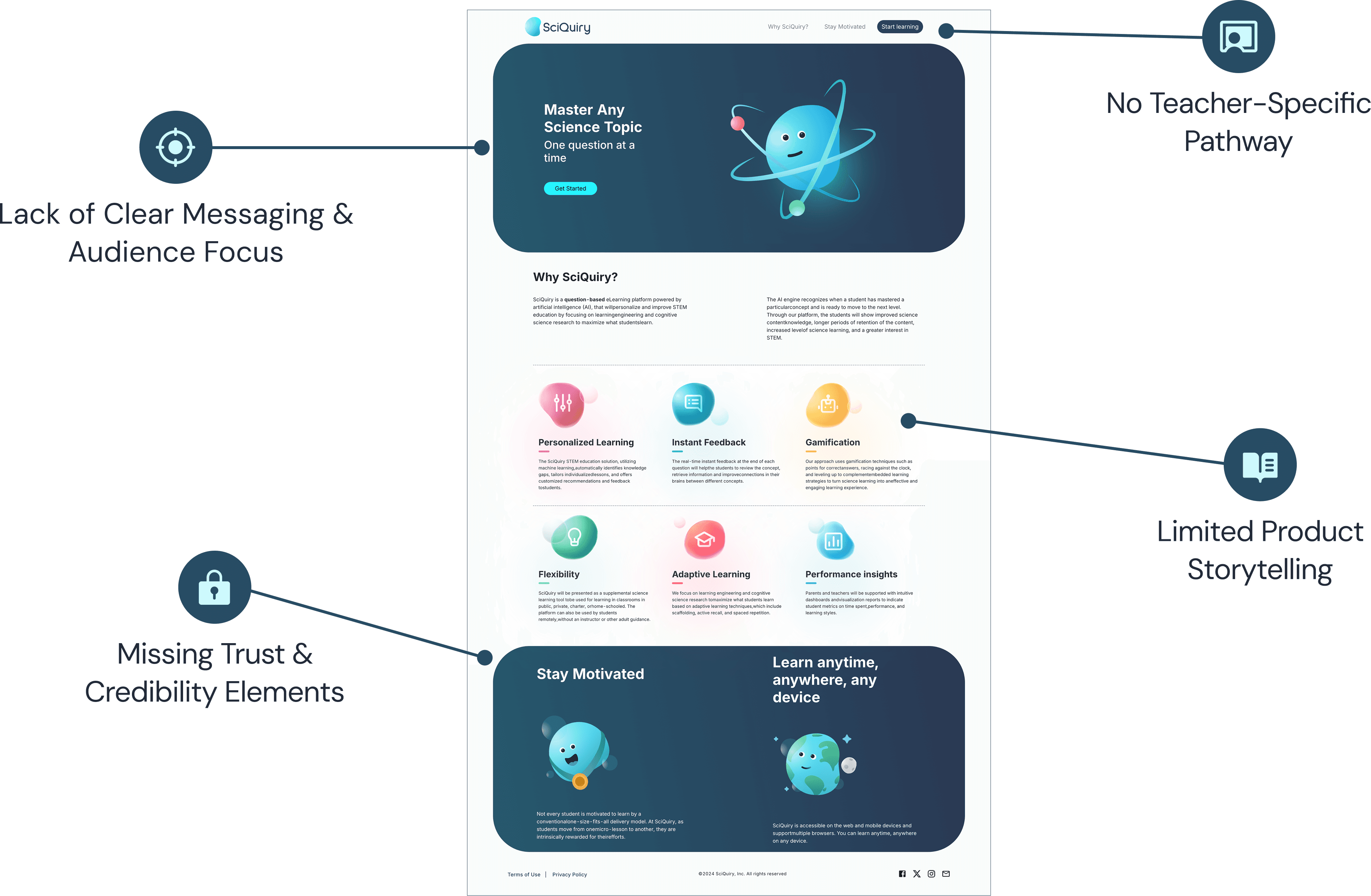
Audit Findings
Audit Findings
The initial audit of the existing website revealed structural friction points:
Messaging did not clearly distinguish between teachers and students
Product functionality was not clearly visible
Navigation did not support a clear evaluation pathway
Pricing and credibility information were missing
What We Heard
What We Heard
User testing reinforced the audit findings:
“Is this for students or teachers?”
“I can’t see what the product looks like.”
The homepage felt too vague to explain value quickly.
79% of educators expressed the need for a dedicated teacher-focused page.
Competitor Patterns
Competitor Patterns
Across competing platforms, three structural patterns were consistent:
Clear teacher-focused pathways
Product experience shown upfront through screens or demos
Transparent pricing and visible credibility signals
SciQuiry lacked these structural evaluation cues.
Key Insights Summary
Key Insights Summary
Research revealed that the challenge was not product capability, but evaluation clarity. Across audit, testing, and competitor analysis, four patterns emerged:
Research revealed that the challenge was not product capability, but evaluation clarity. Across audit, testing, and competitor analysis, four patterns emerged:
Teacher value was not clearly prioritized in the messaging
The product experience was not visible early in the journey
There was no dedicated pathway for teacher evaluation
Pricing transparency and credibility signals were missing
As a result, educators had to work to understand the platform, making evaluation feel effortful rather than intuitive.
As a result, educators had to work to understand the platform, making evaluation feel effortful rather than intuitive.
As a result, educators had to work to understand the platform, making evaluation feel effortful rather than intuitive.
To address this, the experience needed to be restructured around how teachers evaluate classroom tools.
To address this, the experience needed to be restructured around how teachers evaluate classroom tools.
What Needed to Change
What Needed to Change
What Needed to Change
The research made it clear that the issue was not missing features, but missing structure. To support confident classroom adoption, the experience needed to:
The research made it clear that the issue was not missing features, but missing structure. To support confident classroom adoption, the experience needed to:
1. Communicate value clearly
1. Communicate value clearly
Clarify who the platform is for and why it matters within seconds.
Clarify who the platform is for and why it matters within seconds.
2. Show how the product works
2. Show how the product works
Surface real screens and functionality early in the journey.
Surface real screens and functionality early in the journey.
3. Support structured evaluation
3. Support structured evaluation
Help educators quickly assess classroom relevance and use cases.
Help educators quickly assess classroom relevance and use cases.
4. Build trust earlier
4. Build trust earlier
Introduce pricing clarity, credibility, and transparency sooner.
Introduce pricing clarity, credibility, and transparency sooner.
This strategic shift reframed the experience around how educators assess classroom tools.
This strategic shift reframed the experience around how educators assess classroom tools.
Designing for Multiple Audiences
Who Moov is
designed for
A core challenge of the redesign was designing for three distinct audiences at the same time.
SciQuiry needed to feel professional and credible for educators, transparent for parents, and engaging for young learners, without creating confusion about who the platform was truly for.
A core challenge of the redesign was designing for three distinct audiences at the same time.
SciQuiry needed to feel professional and credible for educators, transparent for parents, and engaging for young learners, without creating confusion about who the platform was truly for.
A core challenge of the redesign was designing for three distinct audiences at the same time.
SciQuiry needed to feel professional and credible for educators, transparent for parents, and engaging for young learners, without creating confusion about who the platform was truly for.
Teachers
Teachers
Primary decision-makers and classroom facilitators.
Needed clarity, classroom relevance, and a frictionless onboarding flow.
Parents
Parents
Decision influencers for at-home learning.
Looked for credibility, transparency, and proof of effectiveness.
Students
Students
End users of the platform.
Needed motivation, visual engagement, and intuitive interaction.
The experience was rebuilt to create clarity for decision-making without losing approachability.
The experience was rebuilt to create clarity for decision-making without losing approachability.
Reframing the Experience
Reframing the Experience
Reframing the Experience
With these needs defined, the next step was restructuring the experience to create clearer pathways and reduce evaluation friction.
With these needs defined, the next step was restructuring the experience to create clearer pathways and reduce evaluation friction.
Prioritizing Teachers in the Navigation
Prioritizing Teachers in the Navigation
Prioritizing Teachers in the Navigation
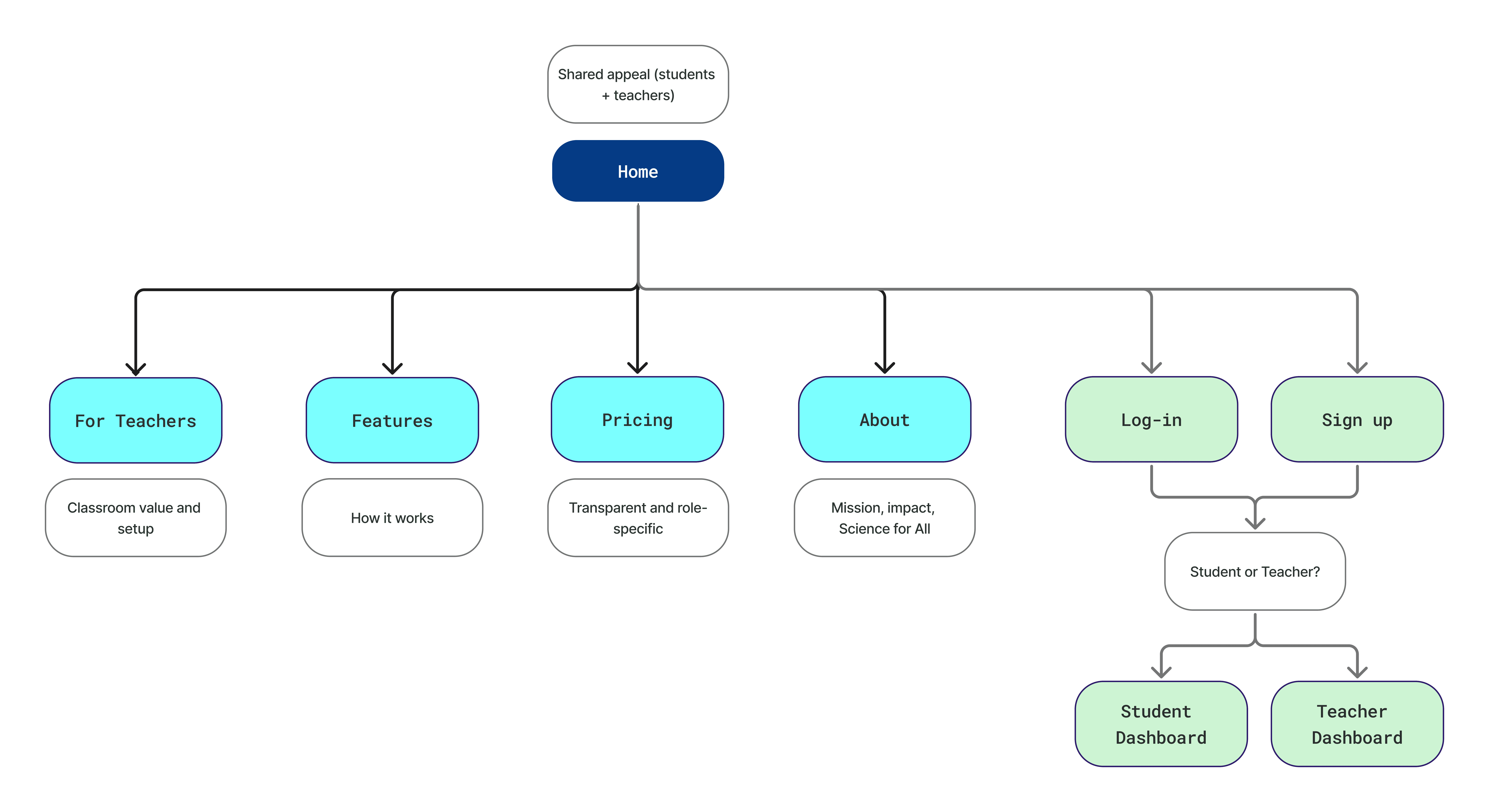
The top-level navigation was simplified to make teacher-relevant content immediately accessible.
A dedicated “For Teachers” page centralized classroom use cases, dashboards, and evaluation information.
The top-level navigation was simplified to make teacher-relevant content immediately accessible.
A dedicated “For Teachers” page centralized classroom use cases, dashboards, and evaluation information.
Separating Evaluation Content Clearly
Separating Evaluation Content Clearly
Separating Evaluation Content Clearly
Features, Pricing, and About were given distinct spaces to reduce ambiguity and support transparent comparison.
This allowed educators to assess value without searching across mixed content.
Features, Pricing, and About were given distinct spaces to reduce ambiguity and support transparent comparison.
This allowed educators to assess value without searching across mixed content.
Structuring Onboarding Around Exploration
Structuring Onboarding Around Exploration
Structuring Onboarding Around Exploration
Onboarding was simplified to reduce friction and allow teachers to understand the product before committing to full classroom setup.
Onboarding was simplified to reduce friction and allow teachers to understand the product before committing to full classroom setup.
From Structure to Layout Exploration
From Structure to Layout Exploration
From Structure to Layout Exploration
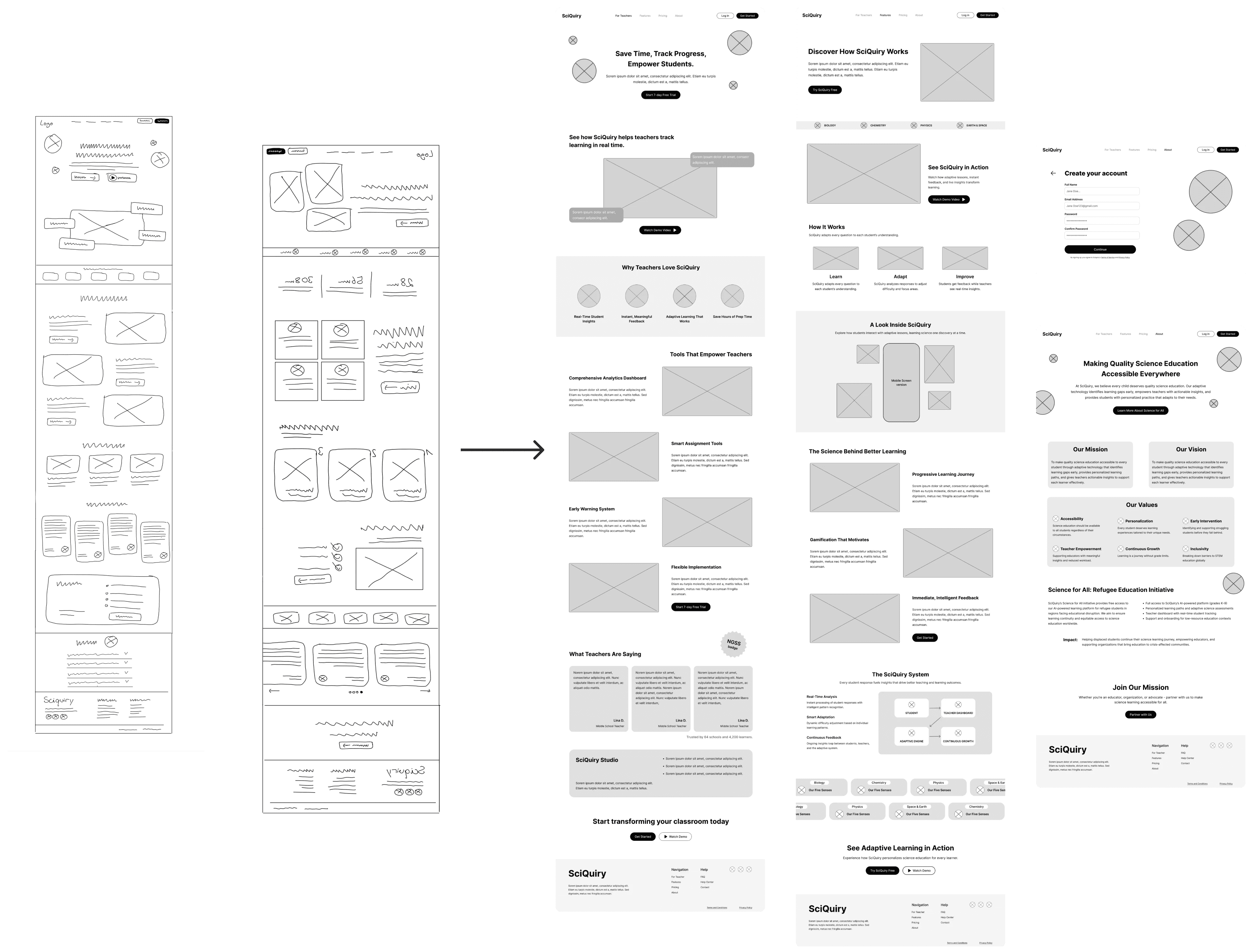
With the new structure defined, the focus shifted to translating architectural decisions into clear, intuitive page layouts.
Working collaboratively, we explored multiple layout directions to test hierarchy, content order, and how clearly evaluation information was communicated.
With the new structure defined, the focus shifted to translating architectural decisions into clear, intuitive page layouts.
Working collaboratively, we explored multiple layout directions to test hierarchy, content order, and how clearly evaluation information was communicated.
With the new structure defined, the focus shifted to translating architectural decisions into clear, intuitive page layouts.
Working collaboratively, we explored multiple layout directions to test hierarchy, content order, and how clearly evaluation information was communicated.
Low- and mid-fidelity wireframes were used to:
Test different homepage hierarchies
Experiment with how early product visuals should appear
Explore variations of the “For Teachers” layout
Compare pricing structures for clarity
Rather than refining one concept immediately, we developed multiple approaches and reviewed them together as a team.
Low- and mid-fidelity wireframes were used to:
Test different homepage hierarchies
Experiment with how early product visuals should appear
Explore variations of the “For Teachers” layout
Compare pricing structures for clarity
Rather than refining one concept immediately, we developed multiple approaches and reviewed them together as a team.
Low- and mid-fidelity wireframes were used to:
Test different homepage hierarchies
Experiment with how early product visuals should appear
Explore variations of the “For Teachers” layout
Compare pricing structures for clarity
Rather than refining one concept immediately, we developed multiple approaches and reviewed them together as a team.
This allowed us to:
Identify which layouts communicated value fastest
Reduce cognitive load
Improve scannability
Align on a shared direction before moving to high fidelity
This allowed us to:
Identify which layouts communicated value fastest
Reduce cognitive load
Improve scannability
Align on a shared direction before moving to high fidelity
This allowed us to:
Identify which layouts communicated value fastest
Reduce cognitive load
Improve scannability
Align on a shared direction before moving to high fidelity
Key Iteration Decisions
Through internal reviews and client feedback, we refined:
The hero section to clarify audience and value
Section order to surface classroom relevance earlier
CTA placement to reduce hesitation
Content grouping to support structured evaluation
Key Iteration Decisions
Through internal reviews and client feedback, we refined:
The hero section to clarify audience and value
Section order to surface classroom relevance earlier
CTA placement to reduce hesitation
Content grouping to support structured evaluation
To explore how Moov should work at a structural level, I started with low-fidelity sketches and wireframes. At this stage, I focused on testing key structural decisions such as:
Home feed vs search as separate entry points
Discovery of clubs, events, and training partners
Filtering by sport, level, and preferences
Detail pages that surface key information before joining
A clear but low-pressure path toward joining or finding a buddy
These wireframes helped define the core structure of the app and highlighted where users might need more clarity before committing.
High-Fidelity Direction
High-Fidelity Direction
High-Fidelity Direction
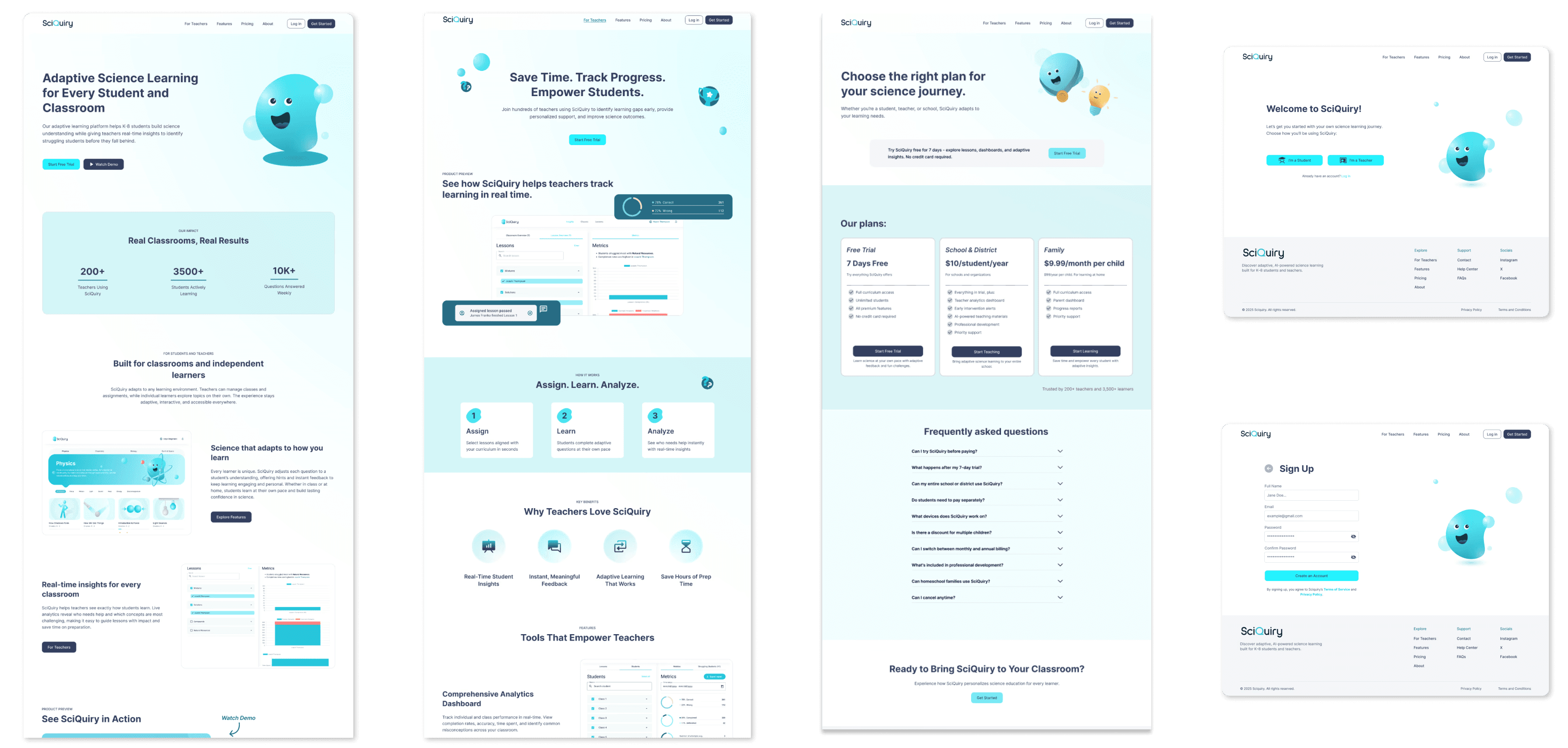
With structure and layout validated, the final phase focused on refining the visual system and strengthening hierarchy through typography, spacing, and color.
The goal was to balance professionalism for educators with an engaging tone for students, while maintaining clarity and transparency throughout the experience.
With structure and layout validated, the final phase focused on refining the visual system and strengthening hierarchy through typography, spacing, and color.
The goal was to balance professionalism for educators with an engaging tone for students, while maintaining clarity and transparency throughout the experience.
Refinement & Alignment
Refinement & Alignment
Refinement & Alignment
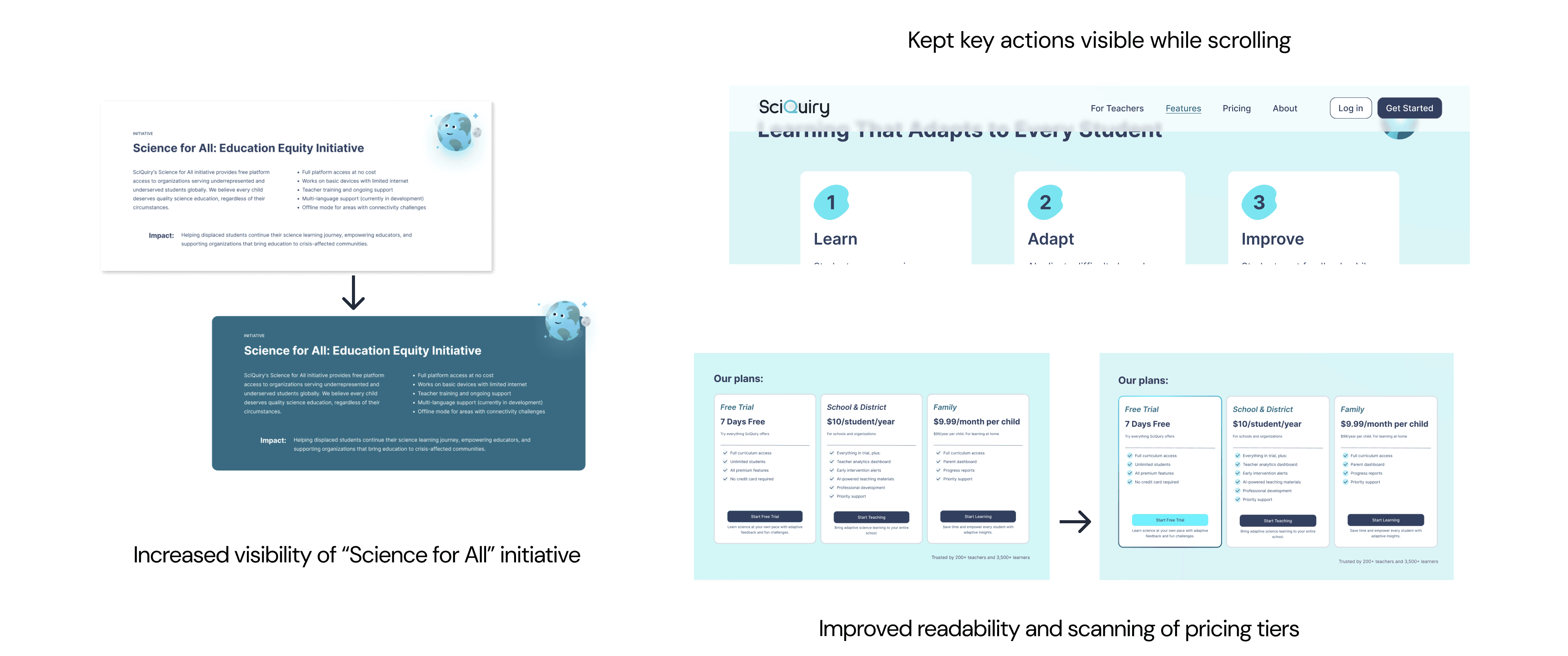
Following internal reviews and client feedback, targeted refinements were made to strengthen clarity and alignment.
Rather than altering the structure, these refinements enhanced usability and polish.
Following internal reviews and client feedback, targeted refinements were made to strengthen clarity and alignment.
Rather than altering the structure, these refinements enhanced usability and polish.
Final Interface

Homepage
The homepage now communicates classroom relevance within seconds, clearly indicating who the platform is for and how it works.
Product functionality is surfaced early to support immediate evaluation.

For Teachers
A dedicated “For Teachers” page centralizes classroom use cases, dashboards, and instructional alignment.
Educators can assess relevance without navigating through student-facing content.

Features
Features are presented through real product visuals and concise explanations, reducing abstraction and improving scannability.
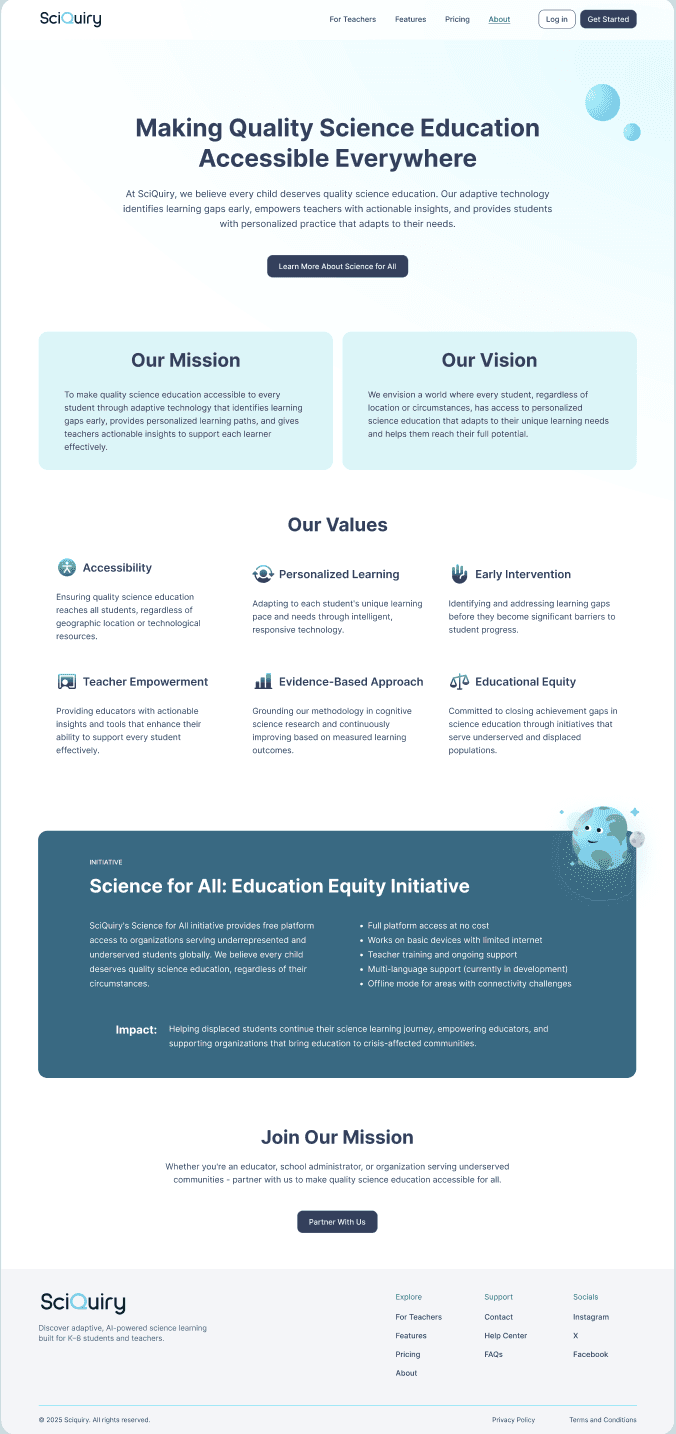
About
The About page provides context around SciQuiry’s mission and educational focus, reinforcing professionalism and transparency.
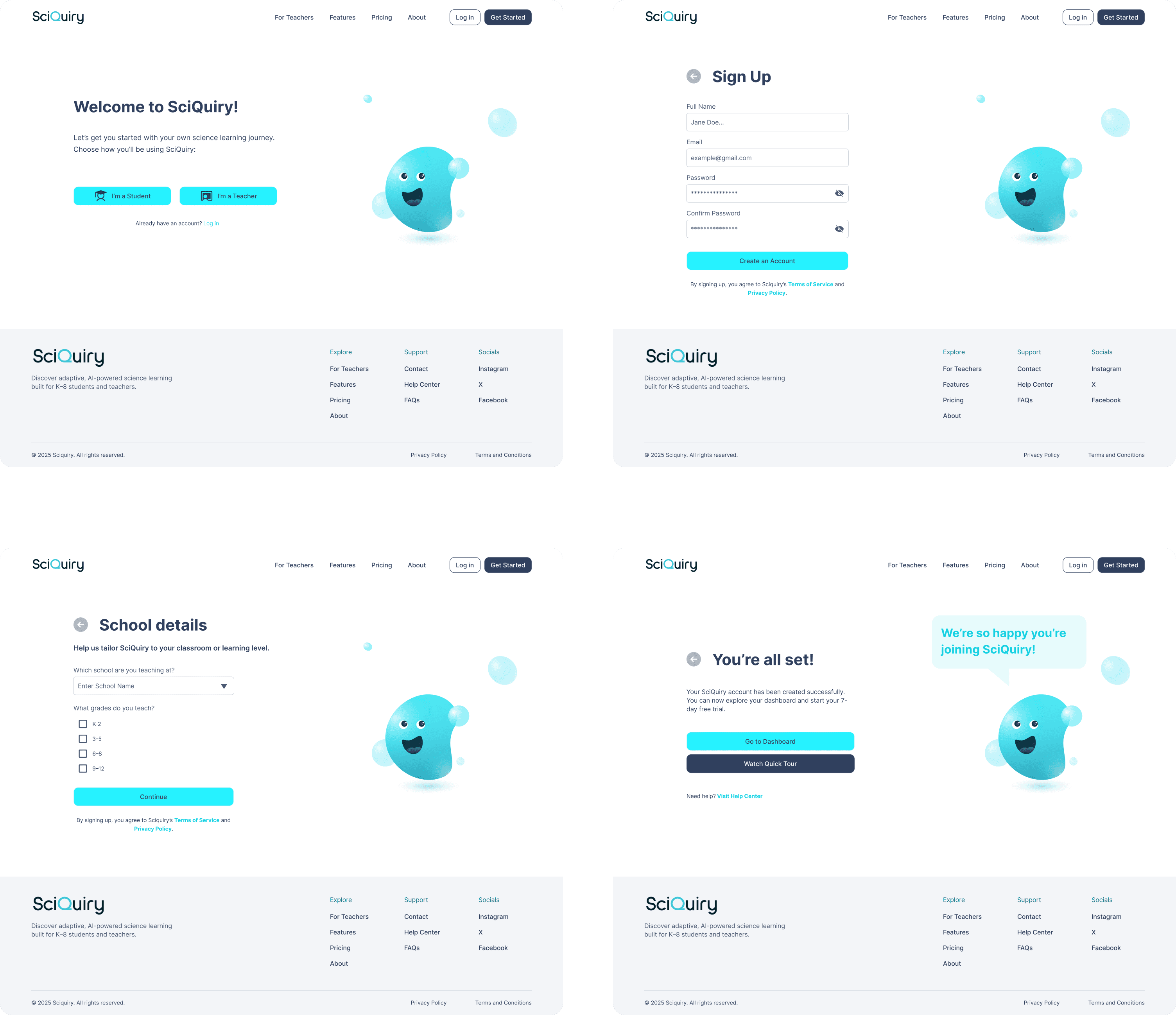
Onboarding
The onboarding flow guides educators through essential setup steps while allowing exploration before full classroom configuration.
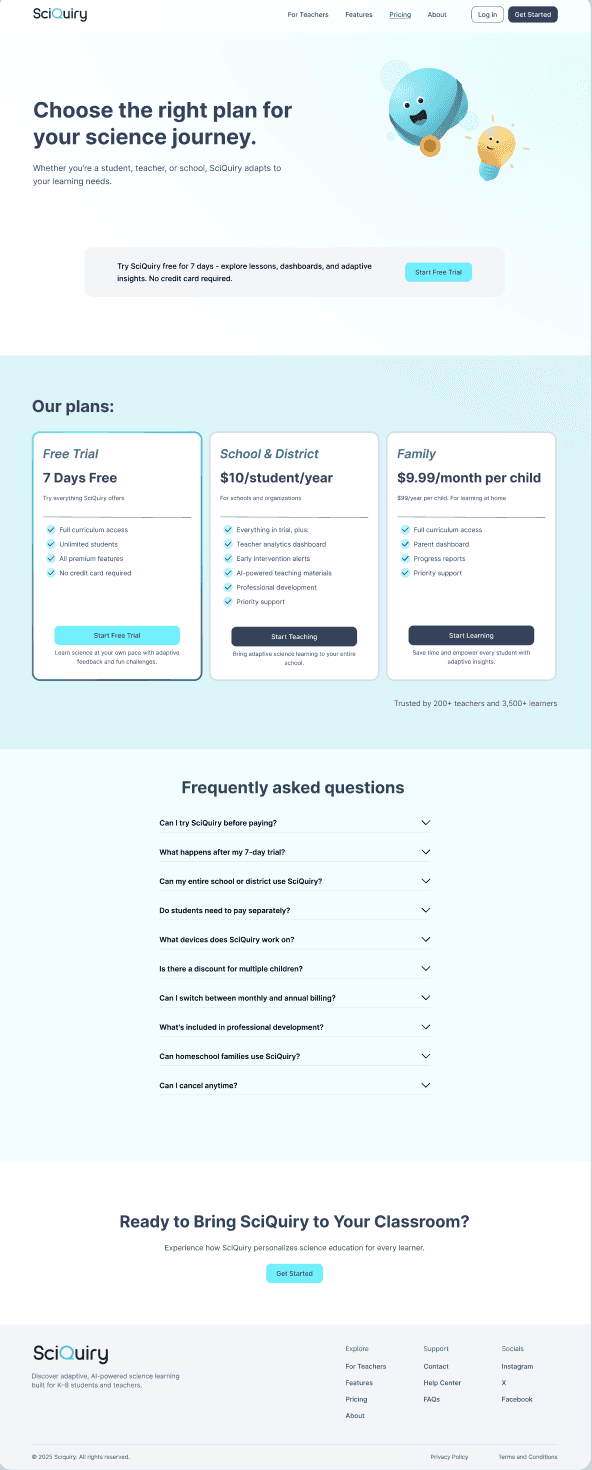
Pricing
Plans are structured for clear comparison, with trial expectations communicated upfront to reduce hesitation and build trust.
Homepage
The homepage now communicates classroom relevance within seconds, clearly indicating who the platform is for and how it works.
Product functionality is surfaced early to support immediate evaluation.
For Teachers
A dedicated “For Teachers” page centralizes classroom use cases, dashboards, and instructional alignment.
Educators can assess relevance without navigating through student-facing content.
Features
Features are presented through real product visuals and concise explanations, reducing abstraction and improving scannability.
About
The About page provides context around SciQuiry’s mission and educational focus, reinforcing professionalism and transparency.
Onboarding
The onboarding flow guides educators through essential setup steps while allowing exploration before full classroom configuration.
Pricing
Plans are structured for clear comparison, with trial expectations communicated upfront to reduce hesitation and build trust.
Homepage
The homepage now communicates classroom relevance within seconds, clearly indicating who the platform is for and how it works.
Product functionality is surfaced early to support immediate evaluation.
For Teachers
A dedicated “For Teachers” page centralizes classroom use cases, dashboards, and instructional alignment.
Educators can assess relevance without navigating through student-facing content.
Features
Features are presented through real product visuals and concise explanations, reducing abstraction and improving scannability.
About
The About page provides context around SciQuiry’s mission and educational focus, reinforcing professionalism and transparency.
Onboarding
The onboarding flow guides educators through essential setup steps while allowing exploration before full classroom configuration.
Pricing
Plans are structured for clear comparison, with trial expectations communicated upfront to reduce hesitation and build trust.
Homepage
The homepage now communicates classroom relevance within seconds, clearly indicating who the platform is for and how it works.
Product functionality is surfaced early to support immediate evaluation.
For Teachers
A dedicated “For Teachers” page centralizes classroom use cases, dashboards, and instructional alignment.
Educators can assess relevance without navigating through student-facing content.
Features
Features are presented through real product visuals and concise explanations, reducing abstraction and improving scannability.
About
The About page provides context around SciQuiry’s mission and educational focus, reinforcing professionalism and transparency.
Onboarding
The onboarding flow guides educators through essential setup steps while allowing exploration before full classroom configuration.
Pricing
Plans are structured for clear comparison, with trial expectations communicated upfront to reduce hesitation and build trust.
Homepage
The homepage now communicates classroom relevance within seconds, clearly indicating who the platform is for and how it works.
Product functionality is surfaced early to support immediate evaluation.
For Teachers
A dedicated “For Teachers” page centralizes classroom use cases, dashboards, and instructional alignment.
Educators can assess relevance without navigating through student-facing content.
Features
Features are presented through real product visuals and concise explanations, reducing abstraction and improving scannability.
About
The About page provides context around SciQuiry’s mission and educational focus, reinforcing professionalism and transparency.
Onboarding
The onboarding flow guides educators through essential setup steps while allowing exploration before full classroom configuration.
Pricing
Plans are structured for clear comparison, with trial expectations communicated upfront to reduce hesitation and build trust.
Homepage
The homepage now communicates classroom relevance within seconds, clearly indicating who the platform is for and how it works.
Product functionality is surfaced early to support immediate evaluation.
For Teachers
A dedicated “For Teachers” page centralizes classroom use cases, dashboards, and instructional alignment.
Educators can assess relevance without navigating through student-facing content.
Features
Features are presented through real product visuals and concise explanations, reducing abstraction and improving scannability.
About
The About page provides context around SciQuiry’s mission and educational focus, reinforcing professionalism and transparency.
Onboarding
The onboarding flow guides educators through essential setup steps while allowing exploration before full classroom configuration.
Pricing
Plans are structured for clear comparison, with trial expectations communicated upfront to reduce hesitation and build trust.
Homepage
The homepage now communicates classroom relevance within seconds, clearly indicating who the platform is for and how it works.
Product functionality is surfaced early to support immediate evaluation.
For Teachers
A dedicated “For Teachers” page centralizes classroom use cases, dashboards, and instructional alignment.
Educators can assess relevance without navigating through student-facing content.
Features
Features are presented through real product visuals and concise explanations, reducing abstraction and improving scannability.
About
The About page provides context around SciQuiry’s mission and educational focus, reinforcing professionalism and transparency.
Onboarding
The onboarding flow guides educators through essential setup steps while allowing exploration before full classroom configuration.
Pricing
Plans are structured for clear comparison, with trial expectations communicated upfront to reduce hesitation and build trust.
Homepage
The homepage now communicates classroom relevance within seconds, clearly indicating who the platform is for and how it works.
Product functionality is surfaced early to support immediate evaluation.
For Teachers
A dedicated “For Teachers” page centralizes classroom use cases, dashboards, and instructional alignment.
Educators can assess relevance without navigating through student-facing content.
Features
Features are presented through real product visuals and concise explanations, reducing abstraction and improving scannability.
About
The About page provides context around SciQuiry’s mission and educational focus, reinforcing professionalism and transparency.
Onboarding
The onboarding flow guides educators through essential setup steps while allowing exploration before full classroom configuration.
Pricing
Plans are structured for clear comparison, with trial expectations communicated upfront to reduce hesitation and build trust.
Homepage
The homepage now communicates classroom relevance within seconds, clearly indicating who the platform is for and how it works.
Product functionality is surfaced early to support immediate evaluation.
About
The About page provides context around SciQuiry’s mission and educational focus, reinforcing professionalism and transparency.
For Teachers
A dedicated “For Teachers” page centralizes classroom use cases, dashboards, and instructional alignment.
Educators can assess relevance without navigating through student-facing content.
Features
Features are presented through real product visuals and concise explanations, reducing abstraction and improving scannability.
Onboarding
The onboarding flow guides educators through essential setup steps while allowing exploration before full classroom configuration.
Pricing
Plans are structured for clear comparison, with trial expectations communicated upfront to reduce hesitation and build trust.
Homepage
The homepage now communicates classroom relevance within seconds, clearly indicating who the platform is for and how it works.
Product functionality is surfaced early to support immediate evaluation.
About
The About page provides context around SciQuiry’s mission and educational focus, reinforcing professionalism and transparency.
For Teachers
A dedicated “For Teachers” page centralizes classroom use cases, dashboards, and instructional alignment.
Educators can assess relevance without navigating through student-facing content.
Features
Features are presented through real product visuals and concise explanations, reducing abstraction and improving scannability.
Onboarding
The onboarding flow guides educators through essential setup steps while allowing exploration before full classroom configuration.
Pricing
Plans are structured for clear comparison, with trial expectations communicated upfront to reduce hesitation and build trust.
Homepage
The homepage now communicates classroom relevance within seconds, clearly indicating who the platform is for and how it works.
Product functionality is surfaced early to support immediate evaluation.
About
The About page provides context around SciQuiry’s mission and educational focus, reinforcing professionalism and transparency.
For Teachers
A dedicated “For Teachers” page centralizes classroom use cases, dashboards, and instructional alignment.
Educators can assess relevance without navigating through student-facing content.
Features
Features are presented through real product visuals and concise explanations, reducing abstraction and improving scannability.
Onboarding
The onboarding flow guides educators through essential setup steps while allowing exploration before full classroom configuration.
Pricing
Plans are structured for clear comparison, with trial expectations communicated upfront to reduce hesitation and build trust.
Homepage
The homepage now communicates classroom relevance within seconds, clearly indicating who the platform is for and how it works.
Product functionality is surfaced early to support immediate evaluation.
About
The About page provides context around SciQuiry’s mission and educational focus, reinforcing professionalism and transparency.
For Teachers
A dedicated “For Teachers” page centralizes classroom use cases, dashboards, and instructional alignment.
Educators can assess relevance without navigating through student-facing content.
Features
Features are presented through real product visuals and concise explanations, reducing abstraction and improving scannability.
Onboarding
The onboarding flow guides educators through essential setup steps while allowing exploration before full classroom configuration.
Pricing
Plans are structured for clear comparison, with trial expectations communicated upfront to reduce hesitation and build trust.
Homepage
The homepage now communicates classroom relevance within seconds, clearly indicating who the platform is for and how it works.
Product functionality is surfaced early to support immediate evaluation.
For Teachers
A dedicated “For Teachers” page centralizes classroom use cases, dashboards, and instructional alignment.
Educators can assess relevance without navigating through student-facing content.
Features
Features are presented through real product visuals and concise explanations, reducing abstraction and improving scannability.
Pricing
Plans are structured for clear comparison, with trial expectations communicated upfront to reduce hesitation and build trust.
About
The About page provides context around SciQuiry’s mission and educational focus, reinforcing professionalism and transparency.
Onboarding
The onboarding flow guides educators through essential setup steps while allowing exploration before full classroom configuration.
Homepage
The homepage now communicates classroom relevance within seconds, clearly indicating who the platform is for and how it works.
Product functionality is surfaced early to support immediate evaluation.
For Teachers
A dedicated “For Teachers” page centralizes classroom use cases, dashboards, and instructional alignment.
Educators can assess relevance without navigating through student-facing content.
Features
Features are presented through real product visuals and concise explanations, reducing abstraction and improving scannability.
Pricing
Plans are structured for clear comparison, with trial expectations communicated upfront to reduce hesitation and build trust.
About
The About page provides context around SciQuiry’s mission and educational focus, reinforcing professionalism and transparency.
Onboarding
The onboarding flow guides educators through essential setup steps while allowing exploration before full classroom configuration.
Homepage
The homepage now communicates classroom relevance within seconds, clearly indicating who the platform is for and how it works.
Product functionality is surfaced early to support immediate evaluation.
For Teachers
A dedicated “For Teachers” page centralizes classroom use cases, dashboards, and instructional alignment.
Educators can assess relevance without navigating through student-facing content.
Features
Features are presented through real product visuals and concise explanations, reducing abstraction and improving scannability.
Pricing
Plans are structured for clear comparison, with trial expectations communicated upfront to reduce hesitation and build trust.
About
The About page provides context around SciQuiry’s mission and educational focus, reinforcing professionalism and transparency.
Onboarding
The onboarding flow guides educators through essential setup steps while allowing exploration before full classroom configuration.
Homepage
The homepage now communicates classroom relevance within seconds, clearly indicating who the platform is for and how it works.
Product functionality is surfaced early to support immediate evaluation.
For Teachers
A dedicated “For Teachers” page centralizes classroom use cases, dashboards, and instructional alignment.
Educators can assess relevance without navigating through student-facing content.
Features
Features are presented through real product visuals and concise explanations, reducing abstraction and improving scannability.
Pricing
Plans are structured for clear comparison, with trial expectations communicated upfront to reduce hesitation and build trust.
About
The About page provides context around SciQuiry’s mission and educational focus, reinforcing professionalism and transparency.
Onboarding
The onboarding flow guides educators through essential setup steps while allowing exploration before full classroom configuration.
Final Outcome
Final Outcome
Final Outcome
The redesign transformed SciQuiry from a structurally ambiguous experience into a clearer, evaluation-driven journey.
Educators can now quickly assess classroom relevance, explore product functionality visually, and understand pricing expectations with confidence.
The redesign transformed SciQuiry from a structurally ambiguous experience into a clearer, evaluation-driven journey.
Educators can now quickly assess classroom relevance, explore product functionality visually, and understand pricing expectations with confidence.
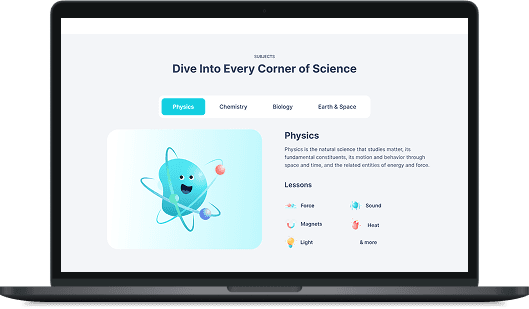
Desktop
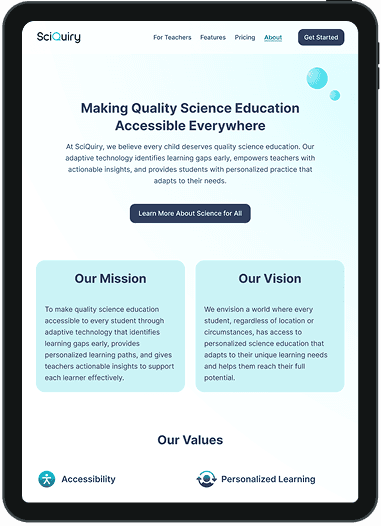
Tablet
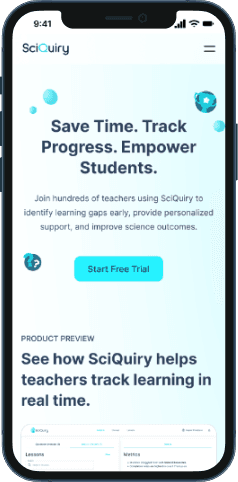
Phone
Reflections & Next Steps
Reflections & Next Steps
Reflections & Next Steps
This project reinforced the importance of clarity, collaboration, and initiative in client work.
Designing for multiple audiences required disciplined prioritization, while close communication ensured alignment throughout exploration and refinement.
If continued, the next phase would focus on:
Clarifying free-trial terms to reduce hesitation
Designing a full student onboarding journey
Introducing a guided “teacher dashboard tour” post-onboarding
These steps would further strengthen trust, engagement, and long-term adoption.
This project taught me how powerful it is to test early and design for different participation styles. Even low-fidelity prototypes revealed issues with navigation and feedback that I wouldn’t have caught from static screens alone.
Designing inside an existing system like Ticketmaster’s meant borrowing familiar components while still pushing for new behaviour – a balance between respecting constraints and advocating for user needs.
Let's create something extraordinary
Let's create something extraordinary
If you’d like to collaborate on a digital product, improve a feature, or bring a new idea to life, I’d love to chat.